Starting a job in Japan as a foreigner can feel like learning a whole new language — even if you already speak Japanese. The unwritten rules, the social dynamics, the way meetings work, the after-work drinking culture — it’s a lot to take in. And getting it wrong can hurt your career without anyone ever telling you what happened.
This Japanese work culture guide gives you an honest look at what to expect, what’s changing, and how to navigate the workplace successfully as a foreign employee.
Japanese workplaces are evolving, but understanding traditional norms is still essential for foreign employees.
The Three Types of Japanese Workplaces
Not all Japanese companies are the same. Your experience will vary dramatically depending on where you work:
Traditional Japanese Companies (Nihon-teki Kigyo)
Think large corporations like major manufacturers, banks, trading companies, and government offices. These tend to follow:
Seniority-based promotion: Your age and years of service matter more than individual performance in many cases
Lifetime employment mindset: Though less common now, the expectation of long-term loyalty remains
Consensus decision-making: Decisions go through multiple layers of approval (ringi system)
Long working hours: Staying late to match your team is often expected
International Companies in Japan
Foreign-headquartered companies operating in Japan (Goldman Sachs, Google, McKinsey, etc.) tend to be more performance-based, with flatter hierarchies and greater work-life balance. However, they often adopt some Japanese business customs in client-facing situations.
Japanese Startups and Tech Companies
The fastest-growing segment of the Japanese job market. These companies often blend Western-style flat hierarchies with Japanese attention to detail and quality. They’re generally the most foreigner-friendly workplaces. Check our guide on finding a job in Japan for more on each type.
Office Etiquette: The Basics
Greetings and Daily Rituals
When you arrive at work, greet everyone with “Ohayo gozaimasu” (good morning). When you leave, say “Osaki ni shitsurei shimasu” (excuse me for leaving before you). When a colleague leaves, respond with “Otsukaresama desu” (thank you for your hard work).
These aren’t just pleasantries — they’re social glue. Skipping them signals that you don’t respect the team dynamic.
Business Cards (Meishi)
Business card exchange is still a ritual in Japan, especially with external contacts:
Present your card with both hands, text facing the recipient
Receive the other person’s card with both hands and examine it respectfully
Never write on someone’s card in front of them
During a meeting, place received cards on the table in front of you, arranged by seating order
Seating Order (Kamiza/Shimoza)
In meeting rooms, the seat farthest from the door is the most honored position (kamiza), reserved for the most senior person or guest. The seat nearest the door is the least honored (shimoza), typically taken by the most junior person. The same rule applies to taxis (back-left seat is kamiza), elevators, and restaurants.
Punctuality
Being on time means being 5 minutes early. Arriving “on time” is considered slightly late. Being actually late — even by 2 minutes — without advance notice is a serious mark against you.
Communication: Reading Between the Lines
This is where most foreign employees struggle the most.
Indirect Communication
Japanese workplace communication is famously indirect. Here’s what certain phrases often actually mean:
“It’s a bit difficult” (chotto muzukashii) = No
“I’ll consider it” (kentou shimasu) = Probably no
“That’s interesting” (omoshiroi desu ne) = I’m not committing to anything
“There might be some challenges” (kadai ga aru kamo) = There are serious problems
Direct disagreement is rarely expressed openly, especially with superiors. Pay attention to tone, pauses, facial expressions, and what is not being said. If you sense hesitation, it usually means no.
Horenso: The Communication Framework
Ho-ren-so (報連相) is the golden rule of Japanese workplace communication:
Ho (Hokoku / 報告): Report — Proactively update your manager on progress
Ren (Renraku / 連絡): Contact — Share relevant information with your team
So (Sodan / 相談): Consult — Ask for advice before making decisions
Over-communicating is almost never a problem in Japanese workplaces. Under-communicating — making decisions alone, not sharing updates — is one of the fastest ways to lose trust.
Email Etiquette
Japanese business emails tend to be more formal than you might be used to:
Start with the recipient’s company name + name + -sama
Include a pleasantry: “Itsumo osewa ni natte orimasu” (Thank you for your continued support)
Be clear but polite; avoid overly casual language
End with a closing phrase like “Yoroshiku onegai itashimasu”
Team harmony and clear communication are central to Japanese work culture.
Overtime and Work-Life Balance
The Reality of Overtime
Japan’s relationship with overtime is complicated. The concept of karoshi (death from overwork) is well-known, and overtime culture has been a real problem, particularly in industries like finance, consulting, construction, and media.
However, things are changing. The Work Style Reform Act (enacted in stages since 2019) caps overtime at:
45 hours per month
360 hours per year
In exceptional circumstances (with labor-management agreement): 100 hours/month max, averaging 80 hours over multiple months
The “Tsukiai Zangyo” Problem
Even where overtime isn’t technically required, tsukiai zangyo (solidarity overtime — staying late because your boss or team is still working) exists in many traditional companies. As a foreigner, you may feel extra pressure to prove your commitment by staying late.
The good news: at international companies and many Japanese startups, leaving on time is perfectly acceptable. The culture around this is genuinely shifting, especially post-COVID with increased remote work acceptance.
Paid Leave
By law, employees receive 10 days of paid leave after 6 months of employment (for those working at least 80% of scheduled days), increasing to 20 days over time. Since 2019, employers are legally required to ensure employees take at least 5 days of paid leave per year.
In practice, taking all your paid leave can still feel awkward at traditional companies. But legally, it’s your right — and attitudes are gradually changing.
Nomikai: After-Work Drinking Culture
The nomikai (drinking party) is one of Japan’s most distinctive workplace customs. Common types include:
Kangeikai: Welcome party for new employees
Soubetsukai: Farewell party for departing colleagues
Bounenkai: Year-end party (December)
Shinnenkai: New Year party (January)
Regular nomikai: Casual team drinks after work
Attendance is theoretically optional but practically important for building relationships and social capital. Here are some tips:
You don’t have to drink alcohol. Ordering oolong tea or non-alcoholic beer is perfectly fine. The social participation matters more than what’s in your glass.
Wait for the “kanpai” (cheers) before drinking. Don’t start before everyone has their drink.
Pour for others (especially superiors) before refilling your own glass. This shows respect and attentiveness.
The first nomikai is the most important. Even if you can’t attend every one, make an effort for your welcome party and major seasonal events.
What’s Changing in Japanese Work Culture (2026)
Japanese work culture is not static. Here are the major shifts happening now:
Remote and hybrid work: Post-COVID, about 30-40% of companies in major cities offer some form of flexible work arrangements. This was almost unheard of before 2020.
Job-type hiring (jobu-gata): More companies are shifting from the traditional membership-type hiring (where you’re assigned a role) to job-type hiring (where you’re hired for a specific position). This benefits foreign workers who have specialized skills.
Mental health awareness: Stress checks are now legally mandated for companies with 50+ employees. More companies offer Employee Assistance Programs (EAPs).
Diversity and inclusion: More companies are actively recruiting foreign talent, and English-friendly workplaces are increasing, especially in tech and finance.
Side jobs allowed: The government actively encourages companies to allow side jobs (fukugyo), and an increasing number do.
Practical Tips for Foreign Employees
Observe before acting. Spend your first few weeks watching how your colleagues interact, when they take breaks, how they address each other, and how decisions get made. Understanding the informal rules is just as important as knowing the formal ones.
Learn keigo (polite Japanese) for work. Even if your team speaks English, using appropriate Japanese greetings and email formalities will earn you significant respect. Focus on business greetings, email openers/closers, and meeting phrases. Our Japanese learning guide has resources for business Japanese.
Don’t eat lunch alone every day. Lunch is social bonding time. Join your team for lunch at least a few times a week. You don’t need to talk constantly — being present is what matters.
Master horenso. When in doubt, over-communicate. Send progress updates before being asked. Consult your manager on decisions, even if you think you already know the answer. This builds trust faster than any other single behavior.
Be careful with “Western directness.” What feels like honest, efficient communication in your home country can come across as rude or aggressive in Japan. Soften your language, use more qualifiers (“I think maybe we could…”), and avoid publicly pointing out problems without offering solutions.
FAQ
Do I need to attend every nomikai?
No, but attend the important ones — your welcome party, year-end/new-year parties, and farewell parties for close colleagues. For casual weekly drinks, attending once or twice a month is usually enough to maintain good relationships. If you have a genuine reason to skip (family obligations, health), people will understand.
How should I handle disagreements with my boss?
Never challenge your boss publicly. If you disagree, request a private one-on-one meeting. Present your viewpoint as a suggestion or question rather than a direct objection: “I was wondering if we might consider…” or “Could there be another approach to…” Having data or precedent to support your position helps enormously.
Is it true that Japanese companies have very long meetings?
Traditional companies can have lengthy meetings, partly because decisions require consensus from many stakeholders. In startups and international companies, meetings tend to be shorter and more focused. If you’re in charge of a meeting, setting a clear agenda and time limit will be appreciated by everyone.
Can I negotiate my salary in Japan?
Yes, but the approach differs from Western countries. Salary negotiation is typically done during the hiring process rather than after joining. Annual raises at traditional companies often follow a set scale based on seniority. At international companies and startups, performance-based raises and negotiation are more common. Learn more about the cost of living in Japan to understand what salary you need.
What if I experience workplace harassment?
Japan has laws against power harassment (pawa-hara), sexual harassment (seku-hara), and maternity harassment (mata-hara). If you experience any form of harassment, document everything, report it to your company’s HR department, and if that doesn’t resolve it, contact the Labor Standards Inspection Office (Rodo Kijun Kantokusho) or the Hello Work consultation service. Speaking up is your right, and legal protections are in place.
Japanese work culture is evolving — and foreign employees are part of that evolution.
Build Your Professional Network in Japan
Understanding Japanese work culture is one thing — having people to talk to about it is another. Whether you’re dealing with a tricky workplace situation or just want to hear how other foreigners have adapted, having a community makes all the difference.
Join a Yoriai Base community event to connect with other international professionals in Japan, share experiences, and grow your network.
Choosing where to live in Tokyo can feel overwhelming. With 23 special wards and dozens of distinct neighborhoods, each with its own personality, rent level, and lifestyle, narrowing down your options isn’t easy — especially when you’re new to the city or unfamiliar with how Tokyo’s geography actually works.
The good news is that Tokyo is one of the safest and most well-connected cities in the world. You can live almost anywhere and still get to work within a reasonable commute. So the real question isn’t “Where can I live?” — it’s “Where will I thrive?” This guide breaks down the best neighborhoods in Tokyo for foreigners, based on rent, accessibility, community, and overall vibe.
Tokyo’s skyline stretches endlessly — each neighborhood below has its own distinct character
How to Think About Tokyo Neighborhoods
Before diving into specific areas, here are a few things worth understanding about how Tokyo is structured:
Wards (ku) vs. neighborhoods: Tokyo has 23 special wards, each roughly the size of a small city. Within each ward, there are multiple neighborhoods with very different vibes. Minato-ku alone contains Roppongi, Azabu, Akasaka, and Shinagawa — all very different areas.
Train lines matter more than distance: A neighborhood 20 minutes by train from your office is often more convenient than one 10 minutes away on a different line with transfers. Think about which lines you need.
Rent varies by station: Even within the same ward, rent can vary dramatically. A station one or two stops from a major hub is often significantly cheaper with a nearly identical commute.
“Foreigner-friendly” matters: Some landlords still refuse foreign tenants. Areas with higher foreign populations tend to have more landlords and agencies experienced with international renters. Check out our guide to finding an apartment in Japan as a foreigner for more on this.
Central Tokyo: Premium & International
Minato-ku (Roppongi, Azabu-Juban, Hiroo, Akasaka)
Best for: Professionals, diplomats, families at international schools Average 1K rent: ¥120,000–180,000/month Foreign population: ~8.2% (one of the highest in Tokyo)
Minato is Tokyo’s most cosmopolitan ward, home to 81 foreign embassies and a large international community. This is where many corporate expats and diplomats settle, and for good reason — international supermarkets (National Azabu, Nissin), English-friendly medical clinics, and international schools are all within reach.
Roppongi is known for nightlife and entertainment, but the residential areas around Roppongi Hills and Midtown are upscale and convenient. Azabu-Juban has a charming village feel with local shops and a tight-knit community. Hiroo is quieter and popular with families near the international schools.
The trade-off: It’s expensive. Expect to pay a premium for the convenience and international infrastructure. Studios and 1K apartments start around ¥120,000, and family-sized apartments can easily exceed ¥300,000.
Shibuya-ku (Shibuya, Ebisu, Daikanyama, Harajuku)
Best for: Young professionals, creatives, tech workers Average 1K rent: ¥110,000–160,000/month Vibe: Trendy, energetic, well-connected
Shibuya ward is a powerhouse of culture, fashion, and technology. The Shibuya Station area is one of Tokyo’s major hubs, connecting 8+ train and subway lines, making any commute easy.
Ebisu is sophisticated and slightly more relaxed than central Shibuya, with excellent restaurants and bars. Daikanyama is boutique and design-focused — think of it as Tokyo’s Brooklyn. Harajuku/Omotesando is fashion-forward but surprisingly livable in the side streets.
The trade-off: Rent is high, apartments tend to be small, and the most central areas can be noisy. But the access to everything is unbeatable.
Best for: Students, multicultural community seekers, nightlife lovers Average 1K rent: ¥90,000–140,000/month Vibe: Diverse, bustling, everything-in-one
Shinjuku is Tokyo’s busiest station and one of its most diverse wards. Shin-Okubo, known as Tokyo’s Koreatown, is one of the city’s most multicultural areas with Korean, Nepali, Vietnamese, and other international restaurants and shops. It’s a great area if you want to be surrounded by diversity.
Yotsuya offers quiet, walkable residential streets just minutes from Shinjuku Station. Takadanobaba is a lively student area near Waseda University with affordable restaurants and izakayas.
The trade-off: The area around Shinjuku Station itself (especially Kabukicho) can feel overwhelming, and the east side has a rougher reputation. But the residential pockets are excellent.
Meguro-ku (Nakameguro, Jiyugaoka)
Best for: Couples, lifestyle-focused professionals Average 1K rent: ¥100,000–140,000/month Vibe: Stylish, relaxed, cafe culture
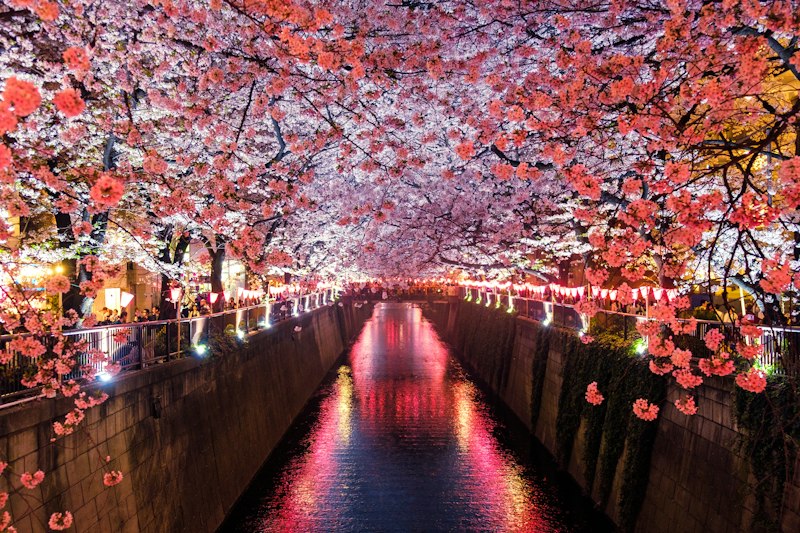
Nakameguro is famous for its cherry blossom-lined Meguro River, independent boutiques, and excellent coffee scene. It’s become one of Tokyo’s most desirable neighborhoods for young professionals who want style without the chaos of Shibuya.
Jiyugaoka is a charming, European-influenced neighborhood with tree-lined streets, patisseries, and a strong sense of community. It’s consistently ranked among Tokyo residents’ most-wanted neighborhoods.
The trade-off: Less direct train access than major hubs (Nakameguro is on the Tokyu Toyoko and Hibiya lines), and popularity has pushed rents up.
Tokyo neighborhoods blend traditional charm with modern convenience in surprising ways
Budget-Friendly & Character-Rich
Nakano-ku
Best for: Budget-conscious residents, subculture fans, those who want a local feel Average 1K rent: ¥70,000–95,000/month Vibe: Local, unpretentious, great value
Nakano is Shinjuku’s quieter, more affordable neighbor — just one stop away on the Chuo Line. Nakano Broadway is a famous hub for anime, manga, and vintage goods, but the neighborhood is much more than that. The covered shotengai (shopping streets) offer groceries and daily essentials at prices 20–30% cheaper than areas a few stops away.
The area has a strong community feel, and while it’s not as polished as Shibuya or Ebisu, many long-term foreign residents love it precisely for its authenticity. English support is limited, so basic Japanese helps.
Koenji (Suginami-ku)
Best for: Artists, musicians, free spirits, budget living Average 1K rent: ¥55,000–75,000/month Vibe: Bohemian, vintage, counter-culture
Koenji is Tokyo’s most bohemian neighborhood. Known for its vintage clothing shops, live music venues, and the famous Koenji Awa Odori festival in August, it attracts creatives and free-thinkers. Rent is some of the lowest you’ll find within reasonable distance of central Tokyo.
If your Japanese is improving and you want to immerse yourself in local Tokyo life without paying central-Tokyo prices, Koenji is one of the best choices. The community is tight-knit and welcoming, though English support is minimal.
Kichijoji (Musashino-shi)
Best for: Families, nature lovers, those wanting premium suburban life Average 1K rent: ¥75,000–100,000/month Vibe: Green, lively, self-contained
Technically outside the 23 wards, Kichijoji is consistently voted one of Tokyo residents’ most-wanted neighborhoods. Inokashira Park provides a green escape, the shopping streets are vibrant, and the area feels like a self-contained small city. It’s about 15–20 minutes from Shinjuku on the Chuo Line.
Kichijoji is excellent for families and anyone who wants access to nature without sacrificing urban convenience. Some English is spoken at trendy businesses, and daily needs are easily covered within walking distance.
Family-Friendly Neighborhoods
Setagaya-ku (Futako-Tamagawa, Sangenjaya)
Best for: Families with children, those wanting space Average 1K rent: ¥80,000–110,000/month Vibe: Spacious, green, family-oriented
Setagaya is Tokyo’s largest ward by population and a top choice for families. Futako-Tamagawa (nicknamed “Futako”) sits along the Tama River with parks, shopping malls, and a relaxed atmosphere. Sangenjaya is more urban with a lively restaurant and bar scene but still feels residential.
Rent in Setagaya is typically 30–50% less than Minato or Shibuya, and you get significantly more space. International schools and parks are accessible, though commute times to central Tokyo are longer (30–45 minutes).
Edogawa-ku / Nishi-Kasai
Best for: Indian community, families on a budget Average 1K rent: ¥60,000–80,000/month Vibe: Multicultural, affordable, community-driven
Nishi-Kasai in Edogawa ward has become known as Tokyo’s “Little India” with a thriving Indian community, grocery stores, and restaurants. It’s one of the most affordable areas in Tokyo with direct metro access (Tozai Line) to central Tokyo in about 20 minutes. A great option if you’re looking for an established international community on a budget.
Quick Comparison Table
Neighborhood
1K Rent
Best For
Foreigner-Friendly
Minato (Roppongi/Azabu)
¥120K–180K
Professionals, diplomats
Very High
Shibuya (Ebisu/Daikanyama)
¥110K–160K
Young professionals
High
Shinjuku (Yotsuya/Shin-Okubo)
¥90K–140K
Students, diversity
High
Meguro (Nakameguro)
¥100K–140K
Couples, creatives
Medium-High
Nakano
¥70K–95K
Budget, local feel
Medium
Koenji
¥55K–75K
Artists, budget
Medium-Low
Kichijoji
¥75K–100K
Families, nature
Medium
Setagaya
¥80K–110K
Families, space
Medium
Nishi-Kasai
¥60K–80K
Indian community, budget
Medium
Practical Tips for Choosing Your Neighborhood
Visit before you commit. Spend a weekday evening and a weekend afternoon in any neighborhood you’re considering. The vibe can change dramatically between business hours and evenings.
Check your commute route, not just time. A 30-minute ride on a seat with no transfers is much better than a 20-minute ride with two crowded transfers. Use apps like Google Maps or Navitime to simulate your actual commute.
Look one or two stations out from the popular ones. Living near a major station like Shibuya or Shinjuku is prestigious but expensive. Moving just one or two stops along the same line can save you ¥20,000–40,000/month with almost no difference in convenience.
Consider your social life. If most of your friends and community events are in a certain area, living nearby will dramatically improve your quality of life. Check where expat communities and international events are concentrated.
Don’t forget about supermarkets and daily essentials. Having a well-stocked supermarket within walking distance matters more than you think, especially on rainy days or when you’re tired after work. Check for stores like Life, Maruetsu, OK Store, or Hanamasa nearby.
Frequently Asked Questions
Can foreigners rent apartments anywhere in Tokyo?
Legally, yes. In practice, some landlords still refuse foreign tenants, though this is gradually decreasing — especially in areas with higher foreign populations. Using a foreigner-friendly real estate agency significantly increases your options. Areas like Minato, Shibuya, and Shinjuku have the most experience with international tenants. Read our complete guide to finding an apartment as a foreigner for step-by-step advice.
How much should I budget for rent in Tokyo?
A general guideline is to spend no more than 30% of your monthly income on rent. For a single person, you can find decent 1K (one room + kitchen) apartments from ¥55,000 in budget areas to ¥180,000+ in central locations. Remember to budget for initial costs too — key money, deposit, agency fees, and guarantor fees can total 4–6 months’ rent upfront. See our cost of living guide for detailed breakdowns.
Is it worth living further out to save on rent?
It depends on your priorities. Living in areas like Koenji, Nakano, or Kichijoji can save you ¥30,000–70,000/month compared to central locations while adding only 10–20 minutes to your commute. For many people, the trade-off is worth it — more space, cheaper groceries, and a more local feel. However, if your social life and work are concentrated in central Tokyo, commute fatigue can add up.
Which areas have the best English support?
Minato-ku (especially Roppongi, Azabu, Hiroo) has the most English-language infrastructure — bilingual signs, English-speaking staff at shops and restaurants, international clinics, and foreign-friendly services. Shibuya and Shinjuku also have good English support in the main commercial areas. As you move to more residential or western neighborhoods, English support decreases, but basic Japanese will get you through daily life anywhere.
What about safety? Are any areas to avoid?
Tokyo is extremely safe by global standards, and there are no neighborhoods that are genuinely “dangerous.” Some areas around entertainment districts (Kabukicho in Shinjuku, parts of Roppongi at night) can feel seedier, but even these are safe by international standards. The biggest safety concerns for most residents are bicycle theft and umbrella theft — which tells you a lot about how safe this city is.
Many of Tokyo’s best residential areas offer peaceful, tree-lined streets just minutes from bustling stations
Find Your Place — and Your People
Choosing a neighborhood isn’t just about rent and commute times. It’s about finding a place where you feel at home — where you recognize faces at the local konbini, where you have a go-to ramen shop, where you feel like you belong.
Whatever neighborhood you choose, building a community around you makes all the difference. If you’re looking to connect with other foreigners and Japanese locals who share your interests, check out our upcoming events at Yoriai Base. Whether you’ve just arrived or have been here for years, there’s always room to grow your circle.
Walking into a Japanese restaurant for the first time can feel like stepping into a different world. The ticket machines, the shouts of irasshaimase!, the plastic food displays in the window — everything works a little differently from what you might be used to. But here’s the good news: Japan’s food culture is one of the most welcoming and rewarding experiences you’ll have as a foreign resident. You just need to know how it all works.
Whether you’ve just arrived in Japan or have been here for a while but still feel a bit unsure about dining customs, this guide will walk you through everything — from how to enter and order at different types of restaurants, to the etiquette that actually matters (and the “rules” you don’t need to stress about).
Japanese restaurants often welcome you with warm lighting and inviting displays outside
Types of Restaurants You’ll Encounter in Japan
Japan has an incredible variety of dining options, and understanding the main types will help you feel at home wherever you go.
Izakaya (居酒屋) — Japanese Pubs
Izakayas are casual drinking establishments that serve a wide variety of small dishes. Think of them as Japan’s answer to tapas bars. You’ll order multiple small plates to share with your group, paired with beer, sake, highballs, or other drinks. Many izakayas offer nomihodai (all-you-can-drink) plans for a set price and time limit — usually around ¥1,500–2,500 for 90 to 120 minutes.
Be aware of the otoshi (お通し), a small appetizer that’s automatically served when you sit down. This isn’t free — it typically costs ¥300–500 and functions as a cover charge. It’s standard practice, not a scam.
Ramen Shops and Gyudon Chains
Fast-casual restaurants like ramen shops and beef bowl chains (Yoshinoya, Matsuya, Sukiya) often use a ticket vending machine (食券機, shokkenki) at the entrance. You insert money, press the button for your order, take the ticket, and hand it to the staff. No speaking required — which makes these places surprisingly foreigner-friendly. Most machines now have English options or at least photos.
Family Restaurants (ファミレス)
Chains like Gusto, Saizeriya, Jonathan’s, and Denny’s Japan are everywhere. They offer large menus, affordable prices, and usually have tablet ordering systems at your table — many with English available. These are great for casual meals and late-night dining.
Conveyor Belt Sushi (回転寿司)
Places like Sushiro, Kura Sushi, and Hamazushi let you grab plates off a belt or order via touchscreen tablet. Each plate is color-coded by price (usually ¥100–300+). At the end, staff will count your plates or scan them automatically. Fun, affordable, and no language barrier.
Traditional and Fine Dining
Higher-end sushi bars, kaiseki restaurants, and tempura counters often offer omakase (chef’s choice) courses. If you can’t read the menu, saying “osusume wa nan desu ka?” (What do you recommend?) works well. Expect to spend ¥5,000–15,000+ per person depending on the restaurant.
How to Enter, Sit Down, and Order
Entering a Restaurant
When you walk in, you’ll hear the staff call out irasshaimase! (いらっしゃいませ — “Welcome!”). You don’t need to respond — a smile and a nod is fine. A staff member will typically ask “nan-mei sama desu ka?” (How many in your group?). Hold up fingers if you’re not confident with the Japanese.
If there’s a shoe-removal area (common in tatami seating), you’ll see a step-up and shoe lockers. Remove your shoes, store them, and take the key with you.
Ordering Your Food
Here’s where things have changed a lot in recent years. Many restaurants now use one of these systems:
Tablet ordering — A touchscreen device at your table. Often has English. Browse, tap, and submit.
QR code ordering — Scan a code with your phone, browse the menu on your browser, and order. This became widespread after COVID.
Ticket machine — Buy a meal ticket at the entrance before sitting down.
Paper menu + verbal order — The traditional way. Point at items if needed, or say the dish name.
If you’re stuck, the phrase “kore o kudasai” (これをください — “This one, please”) while pointing at a menu item will always work.
Useful Phrases for Ordering
Sumimasen (すみません) — “Excuse me” (to get a waiter’s attention)
____ o kudasai — “____ please”
Osusume wa? — “What do you recommend?”
Eigo no menyu wa arimasu ka? — “Do you have an English menu?”
Okaikei onegaishimasu — “Check, please”
Ramen shops are some of the most foreigner-friendly restaurants — just buy a ticket and sit down
Dining Etiquette That Actually Matters
Let’s be honest — Japanese people understand that foreigners won’t know every rule. Nobody expects perfection. But knowing the basics will make your experience smoother and show respect for the culture.
Chopstick Rules
A few things to genuinely avoid:
Don’t stick chopsticks vertically into rice — This resembles funeral incense and is considered bad luck.
Don’t pass food from chopstick to chopstick — This mimics a funeral ritual and makes people uncomfortable.
Don’t point with chopsticks or use them to move dishes around.
Don’t rub wooden chopsticks together — It implies the restaurant is cheap.
When eating from shared plates, use the back end of your chopsticks or the serving utensils provided.
Slurping Is Good
Yes, slurping noodles and soup is not only acceptable — it’s expected. Slurping ramen, soba, and udon shows appreciation and helps cool the noodles. Don’t be shy about it.
No Tipping — Ever
This is one of the biggest differences from Western dining culture. Do not tip in Japan. It can actually be confusing or even offensive to staff. Service is included, always. The price on the menu is what you pay (plus tax, which is usually already included).
Finish Your Food
In Japan, leaving food on your plate is considered wasteful (mottainai). Order what you can eat, and try to finish everything — especially rice. This also means most restaurants won’t offer takeaway containers for leftovers.
The Oshibori (Hand Towel)
You’ll receive a wet towel (hot or cold depending on the season) when you sit down. Use it to clean your hands before eating. Don’t use it on your face or the table — that’s considered poor manners in most settings.
Paying the Bill
Payment customs vary by restaurant type:
Pay at the register: Most common. When you’re done, take the bill slip from your table to the register near the exit. Say “okaikei onegaishimasu” if you need to request it.
Pay at the table: Some higher-end restaurants bring the bill to you.
Prepaid ticket: At ramen shops and fast-casual places, you’ve already paid.
Cash is still king in many places, though cashless payment (IC cards like Suica/Pasmo, credit cards, QR payments like PayPay) has expanded massively. Smaller restaurants and rural areas may still be cash-only, so always carry some yen.
Splitting the Bill
In Japan, splitting the bill (warikan) is common among friends but handled differently than in the West. Rather than asking the server to split it, one person usually pays the total and others transfer their share via apps like PayPay or bank transfer. Some izakayas can split by person if you ask.
Navigating Dietary Restrictions and Allergies
This can be tricky in Japan. Japanese culture places high value on eating what’s served, and many restaurants aren’t set up for substitutions. Here’s how to handle it:
Vegetarian/Vegan: Many Japanese dishes contain hidden dashi (fish stock) or animal products. Look for restaurants specifically labeled as vegetarian, or try shojin ryori (Buddhist temple cuisine). Indian and other ethnic restaurants are reliable alternatives.
Halal: Halal restaurants are growing, especially in Tokyo and Osaka. The app “Halal Navi” is useful for finding certified options.
Allergies: Carry a card written in Japanese listing your allergies. Many chain restaurants have allergy information on their menus or websites.
Gluten-free: Soy sauce contains wheat, making this challenging. Rice-based dishes are your safest bet.
Where to Find Great Restaurants
Forget Yelp and TripAdvisor for the best finds. Here’s what actually works in Japan:
Tabelog (食べログ) — Japan’s most trusted restaurant review site. A score of 3.5+ is genuinely excellent. Available in English but more detailed in Japanese.
Google Maps — Surprisingly reliable in Japan with local reviews. Sort by rating and check photos.
Instagram — Search location tags or hashtags like #東京ランチ (Tokyo lunch) or #ラーメン (ramen).
Walking around — Some of the best restaurants in Japan have no online presence. Look for long lines during lunch or small shops in back alleys.
Practical Tips for Eating Out in Japan
Download a translation app. Google Translate’s camera function can read Japanese menus in real time. Point your phone at the menu and get instant translations.
Eat during off-peak hours. Popular restaurants often have long waits during prime lunch (12:00–13:00) and dinner (18:00–20:00) times. Going 30 minutes early or late can save you significant wait time.
Try the daily special (日替わり, higawari). Many restaurants offer a daily set meal that’s fresh, balanced, and great value — usually ¥800–1,200 for a full meal with rice, soup, and sides.
Don’t be afraid to eat alone. Solo dining is completely normal in Japan. Many ramen shops and gyudon chains have counter seating designed specifically for solo diners. There’s zero stigma.
Keep cash handy. Despite the rise of cashless payments, many smaller restaurants and local favorites are still cash-only. Carry at least ¥3,000–5,000 for dining out.
Frequently Asked Questions
Do I need to make reservations at restaurants in Japan?
For casual dining — ramen shops, family restaurants, izakayas — usually not. But popular restaurants, especially on weekends, can have long waits. For higher-end dining, reservations are often essential. Some exclusive sushi bars require booking weeks in advance. Apps like TableCheck or calling directly work well, and some restaurants accept reservations through Google Maps.
Can I bring outside food or drinks into a restaurant?
No. Bringing outside food or beverages into a restaurant is considered very rude in Japan. This includes bringing water bottles to the table. Most restaurants provide free water or tea automatically.
What if I have food allergies?
Prepare a card in Japanese that lists your allergies. You can find templates online or use apps like “Allergy Card Japan.” Show it to the staff when you sit down. Major chain restaurants typically have allergy information available, but smaller independent restaurants may not. When in doubt, ask “____ wa haitte imasu ka?” (Does this contain ____?).
Is it okay to share dishes at restaurants?
At izakayas and casual restaurants, sharing is the norm — that’s how they’re designed. At ramen shops or places where you order individual meals, sharing is less common but generally won’t cause issues. At high-end sushi counters or kaiseki restaurants, each person is expected to have their own course.
How much should I budget for eating out in Japan?
Japan offers amazing food at every price point. Budget meals (gyudon, convenience store onigiri, curry chains) run ¥400–800. A good lunch set is typically ¥800–1,500. Dinner at an izakaya with drinks might cost ¥2,500–4,000 per person. Fine dining starts around ¥8,000–15,000+. Compared to many Western countries, Japan offers exceptional quality for the price.
Izakayas offer a relaxed atmosphere perfect for experiencing Japan’s food culture with friends
Make Food Part of Your Community Experience
Eating out in Japan isn’t just about the food — it’s one of the best ways to connect with people and feel at home here. Whether you’re sharing plates at an izakaya with coworkers, chatting with the chef at a tiny counter-seat restaurant, or discovering a hidden gem in your neighborhood, food brings people together.
If you’re looking for more ways to connect with others and build your community in Japan, check out our upcoming community events. We regularly host meetups where food and conversation go hand in hand.
Need to drive in Japan? Whether you live in the countryside where public transport is limited, want the freedom of road trips, or simply need a car for your daily commute, getting a Japanese driver’s license is an important step for many foreign residents. But the process can feel confusing, especially with the rule changes that took effect in October 2025.
This guide breaks down everything you need to know about getting a driver’s license in Japan as a foreigner in 2026 – from converting your existing foreign license to starting from scratch at a driving school.
Driving in Japan follows left-hand traffic rules, similar to the UK and Australia
Your Three Options for Driving in Japan
Option 1: International Driving Permit (IDP) – Temporary Use Only
If you are visiting Japan or have just arrived, you can drive using an International Driving Permit (IDP) obtained in your home country. However, there are important limitations:
Valid for only one year from your date of entry into Japan
Must be based on the 1949 Geneva Convention (not all countries’ IDPs qualify)
Cannot be renewed – once it expires, you must get a Japanese license
Not available to Japanese citizens or long-term residents who leave and re-enter Japan
An IDP is a good short-term solution, but if you plan to stay in Japan long-term, you will need to convert your license or get a Japanese one.
This is the most common path for foreigners who already hold a valid driver’s license from their home country. You convert your existing license to a Japanese one through a process at the prefectural driver’s license center. More details below.
Option 3: Getting a License From Scratch (Driving School)
If you do not have a foreign license or if your country is not eligible for conversion, you will need to attend a Japanese driving school (kyoshujo / 教習所) and pass the full examination. This is the same process Japanese citizens go through. It typically costs 250,000-350,000 yen and takes 1-3 months.
Foreign License Conversion: Step-by-Step Guide
The foreign license conversion process (gaimen kirikae) lets you exchange your valid foreign driver’s license for a Japanese one. Here is how it works in 2026, including the important October 2025 rule changes.
Eligibility Requirements
Valid residence status – You must have a Certificate of Residence (Juminhyo). As of October 2025, short-term visitors (tourists) are no longer eligible for license conversion.
Valid foreign driver’s license – Your license must be current (not expired).
3-month residency proof in issuing country – You must prove you lived in the country that issued your license for at least 90 days after obtaining the license. This is verified through passport stamps, entry/exit records, or other documentation.
October 2025 Rule Changes (Important!)
Japan significantly tightened the rules for foreign license conversion in October 2025. Here is what changed:
Tourists excluded – Short-term visitors can no longer convert their licenses. Only residents with proper visa status qualify.
Harder written exam – The test now has 50 text-based questions (illustration questions removed). The passing score was raised to 90% (up from 70%).
Stricter practical exam – Driving examiners are evaluating more rigorously, with particular attention to left-hand traffic rules, mirror checking, and intersection behavior.
Enhanced document verification – Authorities now scrutinize the 3-month residency requirement more carefully.
Exempt Countries (No Exam Required)
Drivers from certain countries are exempt from both the written and practical exams. If your country is on this list, you essentially just need to submit documents, pass an eye test, and pay the fees:
Full exemption countries: Australia, Austria, Belgium, Canada, Czech Republic, Denmark, Finland, France, Germany, Greece, Hungary, Iceland, Ireland, Italy, Luxembourg, Monaco, Netherlands, New Zealand, Norway, Poland, Portugal, Slovenia, South Korea, Spain, Sweden, Switzerland, United Kingdom, and Taiwan (added June 2025).
United States: Only certain states qualify for exemption – Colorado, Hawaii, Maryland, Ohio, Oregon, Virginia, and Washington. Drivers from other US states must take both exams.
If your country is not on this list (e.g., most US states, China, India, Brazil, Philippines, etc.), you will need to pass both the written and practical driving exams.
Required Documents
Your foreign driver’s license (original, valid, not expired)
Official Japanese translation of your license – Must be done by JAF (Japan Automobile Federation). As of March 2025, JAF only accepts online applications at their website. Cost: 4,000 yen. Processing time: about 2 weeks.
Passport (to verify entry/exit dates and the 3-month residency requirement)
Residence Card (Zairyu Card)
Certificate of Residence (Juminhyo) – Obtainable from your local city/ward office
Passport-size photos (3cm x 2.4cm, taken within 6 months)
Application fee – Around 2,550 yen for the application, plus 2,050 yen for the license issuance
The Process
Get your JAF translation – Apply online at the JAF website, upload photos of your license (front and back), and pay 4,000 yen. Allow about 2 weeks for processing.
Book an appointment – Most license centers now require advance reservations, often only by telephone. Call your prefectural license center to check available dates and confirm which documents you need (requirements can vary slightly by location).
Visit the license center – Bring all documents listed above. Arrive early. The process includes document review, an eye test, and (if your country is not exempt) written and practical exams.
Take the written exam (if required) – 50 true/false questions in 30 minutes. Available in English, Chinese, Korean, Portuguese, and other languages at most centers. You need 45/50 (90%) to pass.
Take the practical driving exam (if required) – A 10-15 minute drive on a closed course at the license center. You will drive a right-hand-drive car on the left side of the road. Key things examiners watch for: mirror checking, signaling, speed control, smooth stopping, and proper intersection navigation.
Receive your license – If you pass everything, your Japanese driver’s license is issued the same day. It is valid for 3 years and renewable like any Japanese license.
Japan offers beautiful driving routes, from coastal highways to mountain roads
Tips for Passing the Practical Driving Exam
The practical exam is where most foreigners struggle, even experienced drivers. The test is not about whether you can drive safely on real roads – it is about following a very specific set of Japanese driving rules on a closed course. Here are key tips:
Exaggerate your mirror checks. Turn your head visibly to check mirrors and blind spots. The examiner needs to see you looking. A quick glance is not enough.
Signal early and correctly. Signal at least 30 meters (about 3 seconds) before turning or changing lanes. Cancel your signal promptly after completing the maneuver.
Stay left. In Japan, you drive on the left side. When turning left, move as close to the left curb as possible. When turning right at an intersection, approach the center line.
Stop completely at stop lines. Come to a full, complete stop with your front bumper at or behind the stop line. Rolling stops are an automatic fail.
Control your speed. The course has speed limits (usually 30-40 km/h). Reach the posted speed – driving too slowly is also penalized.
Practice the S-curve and crank. These are narrow course sections that test low-speed control. Practice makes a big difference here.
Many people fail the practical exam on their first attempt – this is normal. You can retake it (with a fee of about 2,550 yen each attempt). Some driving schools offer practice sessions specifically for the license center course.
Driving School Option (For New Licenses)
If you need to get a license from scratch, Japanese driving schools (kyoshujo) are thorough and well-structured. Here is what to expect:
Cost: 250,000-350,000 yen (some schools offer discounts for foreign residents)
Duration: 1-3 months for automatic transmission, slightly longer for manual
Curriculum: Classroom lectures + on-course driving practice + on-road driving practice
Language: Most instruction is in Japanese, but some schools in major cities offer English-language courses (at a premium)
Final exam: You still need to pass the written exam at the prefectural license center, but the practical exam is conducted at the driving school itself
Practical Tips
Start the JAF translation process early. It takes about 2 weeks, and you cannot proceed without it. Do this as soon as you decide to convert your license.
Call the license center before visiting. Requirements and procedures vary by prefecture. Some centers are only open certain days for foreign license conversion, and appointments fill up fast.
Bring a Japanese-speaking friend if possible. While exams may be available in English, the staff at license centers typically speak only Japanese. Having someone who can help with communication makes the process much smoother.
Study the specific rules for the practical exam. Watch YouTube videos of the license center course in your prefecture. Many people film their successful attempts and share tips.
Do not let your foreign license expire. The conversion process requires a valid (not expired) foreign license. If yours is close to expiring, start the process immediately or renew it through your home country’s embassy or consulate.
FAQ
How much does it cost to convert a foreign license to a Japanese one?
The basic fees are approximately 2,550 yen for the application and 2,050 yen for license issuance, plus 4,000 yen for the JAF translation – around 8,600 yen total. If you need to retake exams, each attempt costs about 2,550 yen. If your country is exempt from exams, the total cost is under 10,000 yen.
How long is a Japanese driver’s license valid?
Your first Japanese license is valid for about 3 years (until your third birthday after issuance). After that, renewal depends on your driving record – clean drivers get 5-year renewals (gold license), while those with violations get 3-year renewals.
Can I drive in Japan with just my home country’s license?
No. You need either an International Driving Permit (IDP), a Japanese driver’s license, or a license from a country that has a special agreement with Japan (Switzerland, Germany, France, Taiwan, Belgium, Slovenia, and Monaco have such agreements allowing direct use with a Japanese translation).
What happens if I fail the practical exam?
You can retake it as many times as needed, with each attempt costing about 2,550 yen. There is no waiting period between attempts other than appointment availability. Most people pass within 2-3 attempts if they study the specific requirements.
Do I need a Japanese license if I live in a major city like Tokyo?
Strictly speaking, no – Tokyo’s public transportation is excellent, and many residents never drive. However, a Japanese driver’s license serves as a convenient photo ID that is widely accepted for everything from opening bank accounts to age verification. Many foreigners get one even if they rarely drive, simply because it is more practical than carrying your passport or residence card everywhere.
A Japanese driver’s license opens up the countryside for exploration
Connect With Other Foreigners in Japan
Navigating the license process is just one of many challenges of living in Japan as a foreigner. The best advice often comes from people who have been through it themselves. Join our international exchange events to meet other expats and locals who can share their experiences and tips.
Raising bilingual children in Japan is one of the most rewarding — and challenging — experiences an international family can have. Whether you’re a mixed-culture couple, an expat family, or a long-term resident with roots in another language, you want your children to thrive in both languages and cultures. But between school schedules, social pressure, and the everyday reality of life in Japan, keeping your home language alive can feel like an uphill battle.
The good news? Thousands of families in Japan have walked this path before you, and their experiences reveal practical strategies that actually work. This guide covers everything from language development fundamentals to school choices, daily routines, and community resources that can help your children grow up bilingual and bicultural.
Reading together in your home language is one of the simplest and most powerful tools for bilingual development.
Understanding Bilingual Development: What the Research Says
Before diving into strategies, it helps to understand how bilingual language development actually works. Here are a few important facts that can set your expectations:
Bilingualism isn’t automatic. Having parents who speak two different languages doesn’t guarantee bilingual children. It takes dedication, consistency, and intentional effort — especially for the minority language (the language not used in the community).
The minority language needs extra support. In Japan, Japanese will always be the dominant language outside your home. Your child will hear it at school, with friends, on TV, and in daily life. The home language requires deliberate, consistent input to survive.
Code-switching is normal. When bilingual children mix languages in a sentence, it’s not confusion — it’s a sign of sophisticated language processing. Don’t worry about it.
There may be a “silent period.” Some children go through phases where they understand the minority language but respond in Japanese. This is normal and usually temporary, especially if you maintain consistent input.
Quality over quantity. While more input is better, the quality of language interaction matters enormously. Engaged, meaningful conversations are far more valuable than passive exposure (like TV).
Language Strategies That Work
Families in Japan have found success with several approaches. The best strategy depends on your family’s specific situation — there’s no single “right” way.
One Parent, One Language (OPOL)
The most well-known approach: each parent consistently speaks their native language to the child. For example, the American parent always speaks English, and the Japanese parent always speaks Japanese.
Pros: Clear and consistent; the child associates each language with a specific person
Cons: Can feel isolating for the non-Japanese-speaking parent in group settings; requires strong discipline to maintain
Tip: Don’t stress about occasional slip-ups. The key is overall consistency, not perfection.
Minority Language at Home (ML@H)
Everyone in the family speaks the minority language at home, and Japanese is used outside. This can be effective when both parents speak the minority language, or when the Japanese-speaking parent is willing to use the other language at home.
Pros: Maximizes minority language exposure; creates a clear “language zone”
Cons: Can be challenging if the Japanese-speaking parent isn’t fluent in the minority language
Time-Based Strategies
Some families designate specific times or days for each language. For example, weekday evenings and weekends might be “English time,” while weekdays during school hours are naturally Japanese.
Practical Daily Habits
Regardless of which main strategy you choose, these daily habits make a real difference:
Reading before bed: 20–30 minutes of reading in the minority language every night is one of the most effective habits. Continue reading aloud even after children can read independently — it builds vocabulary and deepens the parent-child bond.
Narrate daily life: Talk through everyday activities in your language — cooking, shopping, getting dressed. This builds practical vocabulary naturally.
Video calls with relatives: Regular calls with grandparents, cousins, and friends back home give children a real reason to use the language.
Music and songs: Children’s songs, nursery rhymes, and music in the minority language create positive associations and build phonetic awareness.
Playdates with other bilingual children create natural opportunities to use the minority language.
School Choices: Navigating the Japanese Education System
The school your child attends will have a huge impact on their language development. Here’s an overview of the main options available in Japan:
Japanese Public Schools
Language: Instruction entirely in Japanese
Cost: Free (elementary and junior high school)
Pros: High academic quality; full immersion in Japanese language and culture; strong community ties; free
Cons: No support for minority language development; limited English instruction (improving but still basic); can be demanding on parents for school communications
Best for: Families committed to maintaining the minority language at home and who want their children fully integrated into Japanese society
International Schools
Language: English (or other languages) as the primary language; Japanese as a subject
Cons: Expensive; may limit Japanese language and cultural development; social circle may be limited to the international community
Best for: Families who may relocate internationally; families prioritizing English-medium education
Bilingual and Immersion Schools
Language: Instruction in both Japanese and English (or another language)
Cost: Varies (generally between public and international school costs)
Pros: Balanced exposure to both languages; growing number of options in major cities
Cons: Limited availability; quality varies significantly; waitlists can be long
Saturday/Weekend Schools
Many language communities run weekend schools where children can study their heritage language. These are available for English, Chinese, Korean, Portuguese, and many other languages. They provide structured learning, social connections with other bilingual children, and cultural activities.
Managing Technology and Screen Time
Technology can be a powerful ally in bilingual parenting — but it needs to be managed thoughtfully:
Use screens strategically: Set devices to the minority language. Let children watch shows, play games, and use apps in the home language. This supplements (but doesn’t replace) human interaction.
Audiobooks and podcasts: Great for car rides, commutes, or quiet time. They provide natural language input without screen time.
Be intentional about limits: The risk of unrestricted screen time isn’t just about content — it’s that screens replace the richer, interactive language experiences that happen between parent and child.
E-books and online libraries: Services like Epic!, Kindle, and public library apps can give you access to thousands of books in your home language, even if physical books are hard to find in Japan.
Dealing with Common Challenges
“My child only responds in Japanese”
This is extremely common, especially once children start school. Don’t panic. Continue speaking your language consistently. You might gently remind them: “I understand Japanese, but let’s practice English together.” The key is not to turn it into a battle — keep the minority language associated with positive experiences.
“My Japanese partner doesn’t speak my language”
This is more common than you might think. Your partner doesn’t need to be fluent — they can support your efforts by encouraging the child, learning basic phrases, and being patient when you speak your language to the child. Family buy-in matters more than everyone being perfectly bilingual.
“We can’t afford international school”
International school is just one path to bilingualism, and many successfully bilingual children in Japan attend Japanese public schools. Combine public school with dedicated home language time, weekend schools, summer camps, and visits to your home country. The cost of living in Japan guide may help you budget for supplementary language education.
“I feel guilty speaking a language my partner doesn’t understand”
This is a real concern in many international families. Open communication with your partner is essential. Explain what you’re saying, include your partner in conversations, and establish ground rules that work for everyone. Most partners, once they understand the importance, become strong supporters.
Practical Tips for Bilingual Success
Start early and stay consistent. The earlier you establish language routines, the more natural they become. But even if you start late, it’s never too late to begin or restart.
Find your community. Connect with other bilingual families through international exchange events, playgroups, and online communities. Seeing other families on the same journey normalizes the experience for both you and your children.
Make it fun, not forced. If the minority language becomes associated with homework, correction, and pressure, children will resist it. Games, stories, cooking together, and play in the home language create positive associations.
Plan trips home. Regular visits to your home country (or regions where your language is spoken) give children concentrated immersion and a powerful motivation to use the language — especially with relatives their own age.
Consider a tutor or language teacher. Having someone else work with your child on reading and writing in the minority language, even once a week, can take enormous pressure off the parent. This is especially helpful for literacy development.
Building a Bilingual Community in Japan
One of the biggest factors in bilingual success is community. When children see that their home language is valued and used by others beyond their family, it strengthens their motivation to maintain it.
Heritage language playgroups: Many cities have informal playgroups organized by language community. Check Facebook groups, community centers, and embassy websites.
Cultural events and festivals: Participate in cultural events from your home country. Many embassies and cultural centers in Japan organize regular activities.
Online communities: Join Facebook groups like “Bilingual Kids in Japan” or language-specific parenting groups for advice, resources, and encouragement.
Connect with Yoriai Base: Our expat community network can help you find international families in your area who are on the same bilingual journey.
FAQ
At what age should I start raising my child bilingually?
From birth. Babies can distinguish between languages from the earliest stages of development. But if you haven’t started early, don’t worry — children’s language learning abilities remain strong throughout childhood. It’s never too late to start.
Will learning two languages confuse my child or delay their speech?
No. Research consistently shows that bilingualism does not cause language confusion or delays. Bilingual children may have slightly smaller vocabularies in each individual language early on, but their total vocabulary across both languages is typically equal to or greater than monolingual children.
Should I send my child to an international school or Japanese public school?
It depends on your priorities, budget, and long-term plans. Japanese public schools offer excellent education and full cultural integration at no cost. International schools provide bilingual environments but at significant expense. Many families successfully raise bilingual children in Japanese public schools by maintaining strong language practices at home.
How do I prevent my child from losing their home language?
Consistency is key. Maintain daily exposure through reading, conversation, and media in the home language. Regular contact with relatives, visits to your home country, and connections with other families who speak the language all help. Weekend language schools can also provide structured learning and peer interaction.
What resources are available for bilingual families in Japan?
Key resources include heritage language weekend schools, bilingual playgroups, embassy cultural events, online communities (Facebook groups, forums), children’s book subscription services, and educational apps in your home language. Organizations like TELL Japan also offer family counseling if bilingual parenting stress becomes overwhelming.
Connecting with other international families makes the bilingual journey easier — and more fun.
The Bilingual Journey Is Worth It
Raising bilingual children in Japan takes effort, patience, and creativity. There will be phases when your child resists the minority language, times when you question whether it’s worth the effort, and moments when you feel like you’re the only family going through this. You’re not.
The gift of bilingualism goes far beyond language skills. It gives your children a deeper connection to their heritage, greater cognitive flexibility, and the ability to move between cultures with confidence. That’s a gift that will last a lifetime.
If you’re looking for a community of international families who understand this journey, join one of our upcoming Yoriai Base events. Meeting other parents who are navigating the same challenges can be the support and inspiration you need to keep going.